Motorcycle riding requires more than knowing how to operate a bike. Safe riding depends on awareness, anticipation, and the ability to make quick decisions when unexpected situations occur. Defensive motorcycle riding is a skill-based approach that helps riders identify potential dangers before they become serious problems.
Unlike drivers inside enclosed vehicles, motorcyclists have less physical protection during a crash. This makes preparation and awareness especially important. Defensive riding techniques help riders recognize hazards, maintain better control, and create more opportunities to avoid collisions.
By practicing defensive riding habits, motorcyclists can improve their confidence while reducing unnecessary risks on the road.
What Is Defensive Motorcycle Riding?
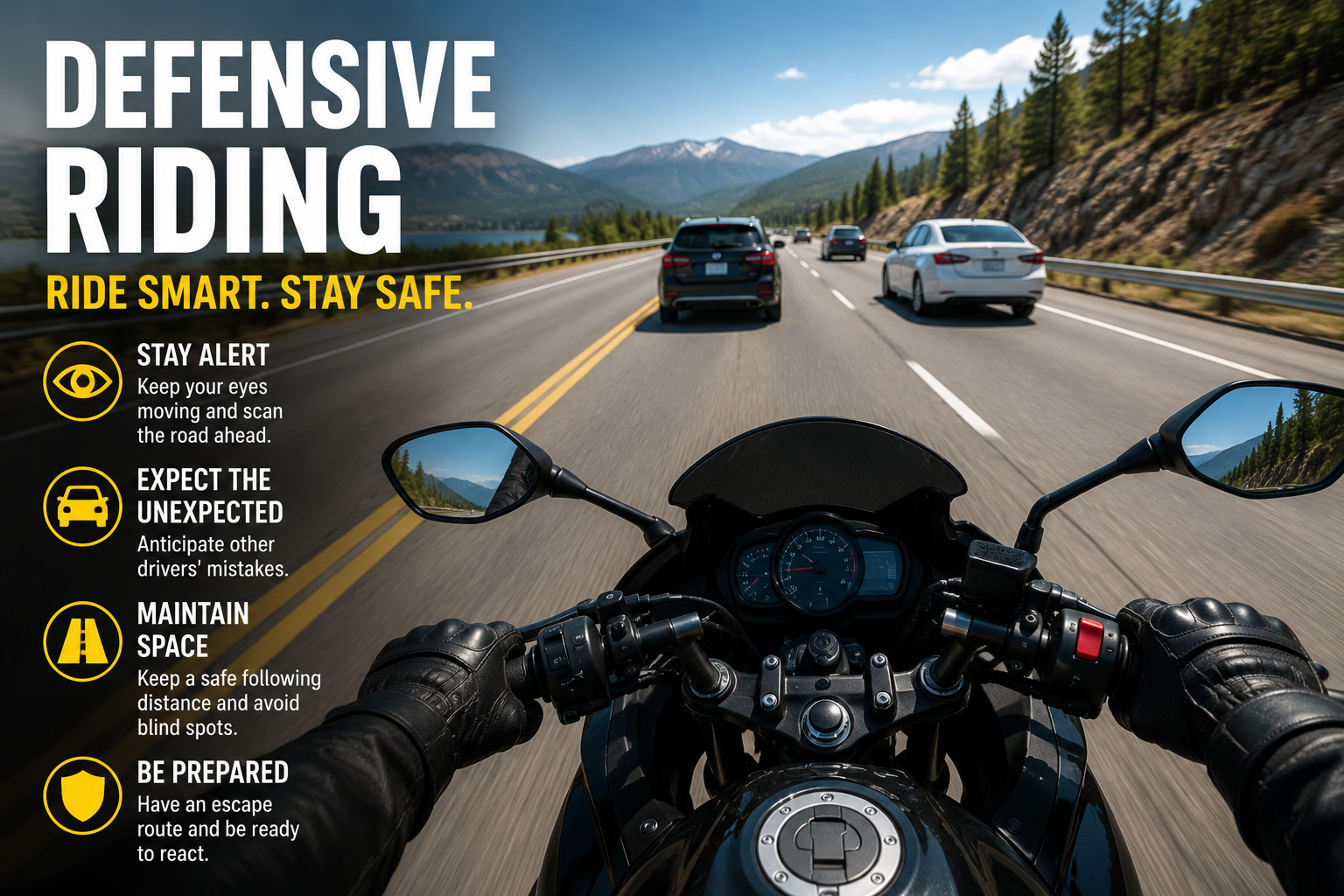
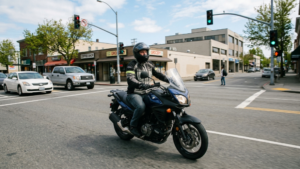
 Defensive motorcycle riding means actively looking for potential hazards and making decisions that prioritize safety. Instead of assuming other drivers will follow traffic rules or notice a motorcycle, defensive riders prepare for possible mistakes from other road users.
This approach involves scanning the road, maintaining safe distances, choosing better riding positions, and being ready to respond to changing conditions.
The National Highway Traffic Safety Administration (NHTSA) emphasizes the importance of rider awareness, proper training, and safe riding practices to reduce motorcycle crash risks.
Why Defensive Riding Matters for Motorcyclists
Many motorcycle accidents happen because drivers fail to notice motorcycles, misjudge their speed, or make sudden movements. Defensive riding helps riders prepare for these situations instead of reacting after the danger appears.
A defensive rider understands that having the right of way does not always prevent a crash. Even when another driver is responsible, the motorcyclist may still suffer serious injuries. Staying alert and anticipating possible mistakes can provide valuable extra seconds to avoid a collision.
Defensive riding is especially important in busy traffic, intersections, parking areas, and roads with limited visibility.
Reading Traffic and Anticipating Driver Behavior
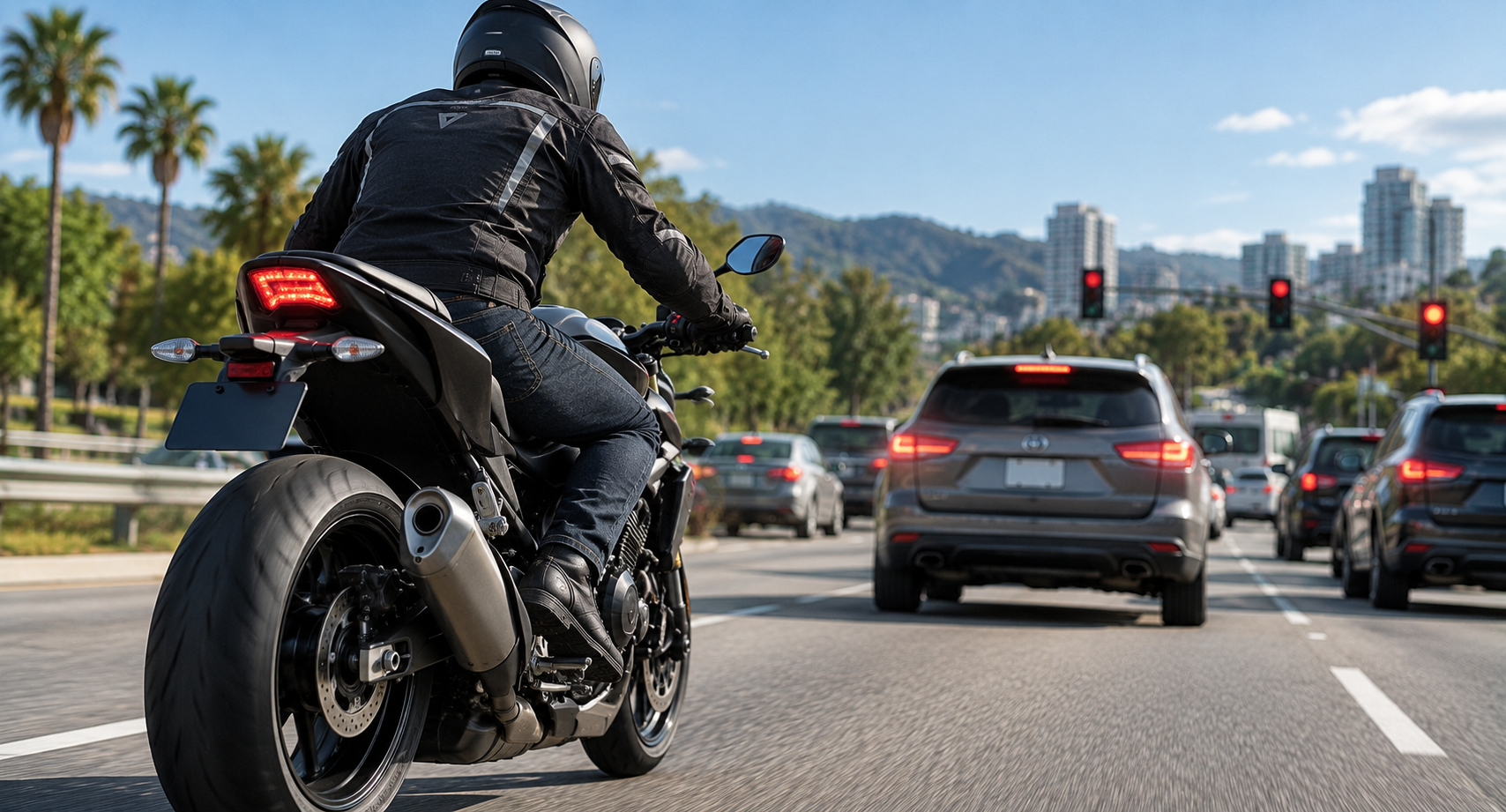
One of the most important defensive riding skills is learning how to read surrounding traffic. Motorcyclists should pay attention to vehicle movements, brake lights, turn signals, and lane positioning.
Watching Vehicle Position and Movement
Drivers often provide warning signs before making a move. A vehicle drifting within a lane, slowing unexpectedly, or approaching a lane change may indicate a possible hazard.
Riders should avoid staying beside vehicles for long periods because drivers may not notice motorcycles in their blind spots. Maintaining awareness of surrounding vehicles gives riders more time to adjust their position if needed.
Recognizing Potentially Dangerous Situations
Defensive riders learn to identify situations that require extra caution, including:
- Vehicles approaching intersections
- Drivers using phones or appearing distracted
- Cars changing lanes without warning
- Vehicles following too closely
- Traffic congestion with limited escape options
Recognizing these risks early allows riders to slow down, increase distance, or change position before a dangerous situation develops.
Maintaining Safe Following Distances
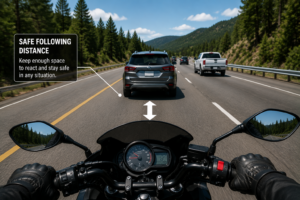
 Following distance is one of the simplest and most effective defensive riding techniques. Riding too close reduces reaction time and leaves little room to avoid sudden stops.
The Importance of Reaction Time
Motorcycles require quick responses because hazards can appear suddenly. A vehicle ahead may stop abruptly, debris may enter the roadway, or traffic conditions may change without warning.
Keeping additional space between your motorcycle and the vehicle ahead provides more time to brake safely or move around an obstacle.
Creating Escape Routes
Defensive riders always consider where they can move if something goes wrong. An escape route is an open area that provides an option during an emergency.
Riders should avoid positioning themselves where they are trapped between vehicles. Maintaining space on at least one side of the motorcycle improves the ability to react.
Managing Speed and Position on the Road
Speed affects every aspect of motorcycle safety. Higher speeds reduce reaction time and increase the severity of crashes when accidents occur.
Adjusting Speed for Traffic Conditions
Defensive riders adjust their speed based on traffic, visibility, road conditions, and possible hazards. The posted speed limit may not always represent the safest speed for current conditions.
Slowing down in crowded areas, unfamiliar roads, or areas with limited visibility allows riders more control over unexpected situations.
Choosing Safer Lane Positions
Lane positioning can influence visibility and safety. Riders should choose positions that maximize their ability to see and be seen.
Avoid riding directly beside vehicles where possible. Staying in areas where drivers can easily see the motorcycle reduces blind spot risks.
For additional safety information, riders can explore our motorcycle injury prevention resources.
Improving Motorcycle Awareness Skills
Awareness is the foundation of defensive riding. A rider’s attention should constantly move between the road ahead, mirrors, surrounding vehicles, and possible hazards.
Scanning Techniques
Effective riders do not focus only on the vehicle directly ahead. They scan farther down the road to identify upcoming hazards before they become immediate problems.
Looking ahead helps riders recognize traffic patterns, stopped vehicles, changing lanes, and road conditions.
Using Mirrors Effectively
Mirrors should be checked regularly to understand what is happening behind the motorcycle. Knowing the position of nearby vehicles helps riders make safer lane changes and avoid sudden surprises.
Defensive Riding Mistakes to Avoid
Even experienced riders can develop habits that increase risk. Avoiding these mistakes improves overall safety.
Assuming Other Drivers See You
One of the most dangerous assumptions a rider can make is believing that other drivers automatically notice them. Motorcycles are smaller than passenger vehicles and may be overlooked.
Riders should always position themselves where they are most visible and remain prepared for driver mistakes.
Following Too Closely
Tailgating reduces reaction time and increases crash risk. Maintaining proper distance gives riders more control and more options during emergencies.
Ignoring Warning Signs
Small warning signs can become major hazards. Unusual vehicle behavior, poor road conditions, or limited visibility should encourage riders to adjust their approach.
Building Better Riding Habits
Defensive riding improves through practice and continued education. Riders should regularly review their habits and continue developing their skills.
Practicing Emergency Maneuvers
Practicing braking, swerving, and controlled maneuvers in safe environments helps riders respond more effectively during emergencies.
Continuing Rider Education
Motorcycle safety training programs can help riders improve decision-making and control skills. The Motorcycle Safety Foundation provides rider education programs designed to improve motorcycle safety awareness.
Conclusion
Defensive motorcycle riding is about preparation, awareness, and smart decision-making. Riders cannot control what other drivers do, but they can control how they respond to potential hazards.
By maintaining safe distances, reading traffic patterns, choosing safer positions, and staying alert, motorcyclists can reduce risks and improve their chances of avoiding dangerous situations.
For more safety guidance, read our article about steps to take after a motorcycle accident and our guide on protective riding gear.