A motorcycle engine produces considerable heat while running. Although every engine is designed to operate within a certain temperature range, excessive heat can affect performance and cause serious mechanical damage. Motorcycle engine overheating is a problem riders should never ignore, especially when warning lights appear or unusual symptoms develop during a trip.
Overheating can happen for several reasons, including low coolant levels, blocked radiators, malfunctioning cooling fans, and inadequate airflow. Some motorcycles use liquid cooling systems, while others rely primarily on airflow to manage engine temperature. Understanding these differences can help riders recognize potential problems and take appropriate precautions.
Learning how motorcycle cooling systems work, identifying early warning signs, and following proper maintenance practices can help prevent unexpected breakdowns and keep a motorcycle operating reliably.
Why Motorcycle Engines Overheat
Motorcycle engines generate heat through fuel combustion and the movement of internal components. Cooling systems regulate this temperature by transferring excess heat away from the engine. When the cooling process becomes less effective, engine temperature may rise beyond its normal operating range.
Overheating does not always mean the engine has a major mechanical failure. Sometimes, a relatively simple issue, such as insufficient coolant or restricted airflow, may be responsible. However, ignoring the problem can lead to expensive repairs or permanent engine damage.
How Motorcycle Cooling Systems Work
Motorcycles generally use air-cooled or liquid-cooled engine designs. Each system manages heat differently, but both serve the same purpose: preventing the engine from becoming excessively hot during operation.
Air-Cooled Motorcycle Engines
Air-cooled engines use airflow to remove heat from the engine. Many have external metal fins that increase the surface area exposed to moving air. As the motorcycle travels, air passes over these fins and carries heat away.
This design is relatively simple because it does not require a radiator, coolant passages, or a water pump. However, airflow is particularly important. Extended idling, slow traffic, or blocked cooling fins may reduce cooling effectiveness depending on the motorcycle’s design.
Liquid-Cooled Motorcycle Engines
Liquid-cooled motorcycles use specialized coolant that circulates through passages in the engine. The heated coolant moves toward the radiator, where airflow helps lower its temperature before it returns to the engine.
This process continues while the motorcycle operates. A cooling fan may also activate when additional airflow is needed, particularly when the bike is stationary or moving slowly.
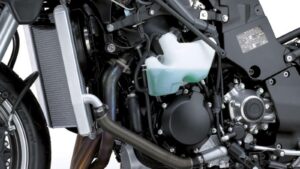 Important Cooling System Components
- Radiator: Releases heat from the circulating coolant.
- Coolant: Transfers heat away from the engine and helps protect internal cooling passages.
- Water pump: Circulates coolant throughout the system.
- Thermostat: Regulates coolant circulation based on temperature.
- Cooling fan: Helps move air through the radiator when natural airflow is insufficient.
- Radiator hoses: Carry coolant between the engine and radiator.
For additional technical information, see Yamaha’s explanation of motorcycle cooling systems.
Common Causes of Motorcycle Engine Overheating
Several mechanical and environmental factors can cause engine temperatures to rise. Identifying the underlying issue is important because continuing to operate an overheating motorcycle can make the damage worse.
Low Coolant Levels
Liquid-cooled motorcycles depend on sufficient coolant to transfer heat away from the engine. When coolant levels become too low, the system may struggle to regulate temperature.
Low coolant can result from leaks, neglected maintenance, or other cooling system problems. Riders should check the coolant reservoir according to the manufacturer’s instructions and investigate unexplained drops in fluid levels.
Blocked or Dirty Radiators
Radiators need adequate airflow to release heat. Dirt, insects, leaves, and other debris can accumulate around radiator fins and restrict airflow.
Physical damage can also reduce cooling effectiveness. Bent fins or obstructions may prevent air from passing through the radiator properly, especially during slow-moving traffic.
Malfunctioning Cooling Fans
Cooling fans help maintain appropriate engine temperatures when natural airflow is limited. If a fan stops working, a liquid-cooled motorcycle may become more vulnerable to overheating while idling or moving slowly.
Electrical problems, damaged wiring, faulty temperature sensors, or a defective fan motor may contribute to this issue.
Thermostat or Water Pump Problems
The thermostat regulates coolant flow according to engine temperature. If it becomes stuck or stops functioning correctly, coolant circulation may be affected.
A damaged water pump can also prevent coolant from moving through the system efficiently. Both problems may cause persistent overheating and should be inspected by a qualified motorcycle technician.
Restricted Airflow and Extended Idling
Some motorcycles depend heavily on airflow to regulate engine temperature. Extended idling, heavy traffic, and obstructed cooling fins may contribute to excessive heat, depending on the engine design.
Liquid-cooled motorcycles can also experience increased cooling demands in slow traffic, which is why their radiator fans are important.
Incorrect or Degraded Coolant
Using an incompatible coolant or allowing old coolant to remain in the system beyond its recommended service interval may affect cooling performance and corrosion protection.
Motorcycle manufacturers specify compatible coolant types and replacement intervals. Riders should follow the owner’s manual rather than mixing different coolant formulations without confirming compatibility.
Honda provides additional information in its motorcycle coolant maintenance guide.
Warning Signs of an Overheating Motorcycle
Recognizing overheating symptoms early can help riders prevent more serious mechanical problems. Some warning signs appear gradually, while others may develop during a single trip.
High Engine Temperature Warning
Motorcycles equipped with temperature gauges or warning indicators may display an unusually high reading when the engine becomes too hot. Riders should understand what these indicators mean by checking their owner’s manual.
A warning light should never be ignored simply because the motorcycle still appears to run normally.
Steam or Coolant Leaks
Visible steam near the radiator or engine may indicate excessive heat or escaping coolant. Puddles or wet areas around hoses and cooling system connections may also suggest a leak.
Riders should avoid touching hot components or attempting to inspect a pressurized cooling system while the engine is hot.
Unusual Smells
An unusual sweet smell may indicate escaping coolant, while burning odors can suggest excessive heat affecting nearby components or fluids.
These smells do not identify a specific problem by themselves, but they should encourage riders to stop and investigate safely.
Reduced Engine Performance
An overheating motorcycle may experience sluggish acceleration, irregular operation, or reduced performance. These symptoms can indicate that the engine is operating outside its normal temperature range.
If performance changes occur together with a temperature warning, riders should stop safely rather than continue the trip.
What to Do When Your Motorcycle Overheats
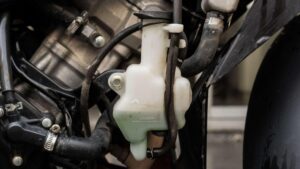 Knowing how to respond to an overheating warning is important. Continuing to ride can cause serious engine damage and may leave the motorcycle unable to operate safely.
- Find a safe place to stop. Move away from active traffic and choose a suitable roadside location.
- Turn off the engine. Follow the motorcycle manufacturer’s instructions for overheating.
- Allow the engine to cool. Do not immediately touch the radiator, hoses, or other hot components.
- Never open a hot radiator cap. Pressurized coolant can escape and cause serious burns.
- Inspect the motorcycle only after it has cooled. Look for visible leaks or other obvious problems without dismantling hot components.
- Arrange professional assistance when necessary. A persistent warning, coolant leak, or malfunctioning fan may require towing and mechanical inspection.
Honda’s official overheating instructions provide an example of the steps specified in a motorcycle owner’s manual. Procedures vary by model, so riders should always follow the instructions for their particular motorcycle.
How to Prevent Motorcycle Engine Overheating
Preventive care can help keep a motorcycle’s cooling system functioning properly. Riders should follow the manufacturer’s maintenance schedule and address unusual temperature changes before they become serious problems.
Check Coolant Levels Regularly
For liquid-cooled motorcycles, inspect the coolant reservoir according to the owner’s manual. Check the motorcycle when it is cool and positioned as instructed by the manufacturer.
If the coolant level repeatedly drops, have the system inspected for leaks instead of continually adding fluid without identifying the cause.
Keep Radiator Fins Clean
Inspect the radiator for dirt, insects, and debris that could restrict airflow. Clean it carefully using a method recommended by the manufacturer.
Avoid aggressive cleaning methods or high-pressure water that could bend delicate radiator fins.
Follow Coolant Replacement Schedules
Coolant gradually loses some of its protective properties. Replacing it according to the recommended service interval helps maintain cooling performance and protect the system from corrosion.
Check Cooling Fans and Hoses
Pay attention to unusual fan operation, visible hose damage, and signs of coolant leakage. Electrical or mechanical cooling system problems should be addressed before they lead to repeated overheating.
Follow the Recommended Maintenance Schedule
Every motorcycle has different service requirements. Regular inspections and manufacturer-recommended maintenance can help identify problems before they affect engine performance.
For a broader maintenance checklist, see our guide to common motorcycle maintenance mistakes.
Common Mistakes Riders Should Avoid
Some actions can make an overheating problem worse. Riders should avoid these mistakes:
- Continuing to ride despite a temperature warning.
- Opening the radiator cap while the engine is hot.
- Adding incompatible coolant products.
- Ignoring repeated coolant loss.
- Assuming a cooling fan problem will resolve itself.
- Skipping manufacturer-recommended inspections.
When the cause of overheating is uncertain, professional inspection is safer than attempting repairs without the appropriate knowledge or equipment.
Conclusion
Motorcycle engine overheating can result from low coolant levels, restricted airflow, malfunctioning cooling fans, and other mechanical problems. Recognizing warning signs early and understanding how cooling systems work can help riders avoid serious engine damage and unexpected breakdowns.
Regular inspections, appropriate coolant, clean radiator fins, and timely professional servicing all contribute to reliable engine performance. Most importantly, riders should never ignore an overheating warning or continue operating a motorcycle that may have a serious cooling system problem.
Taking preventive measures and responding appropriately when temperatures rise can help protect your motorcycle and support safer, more reliable travel.
For more motorcycle safety and prevention information, explore our motorcycle injury prevention resources.