Motorcycle suspension plays a critical role in both rider comfort and safety. It is the system that connects the wheels to the frame, absorbs road imperfections, and ensures consistent tire contact with the road. Properly maintained suspension improves handling, stability, and reduces fatigue during long rides.
Many riders overlook suspension until they experience discomfort or handling issues. Understanding how suspension works, how it affects safety, and how to adjust and maintain it is essential for both new and experienced riders.
Understanding Motorcycle Suspension
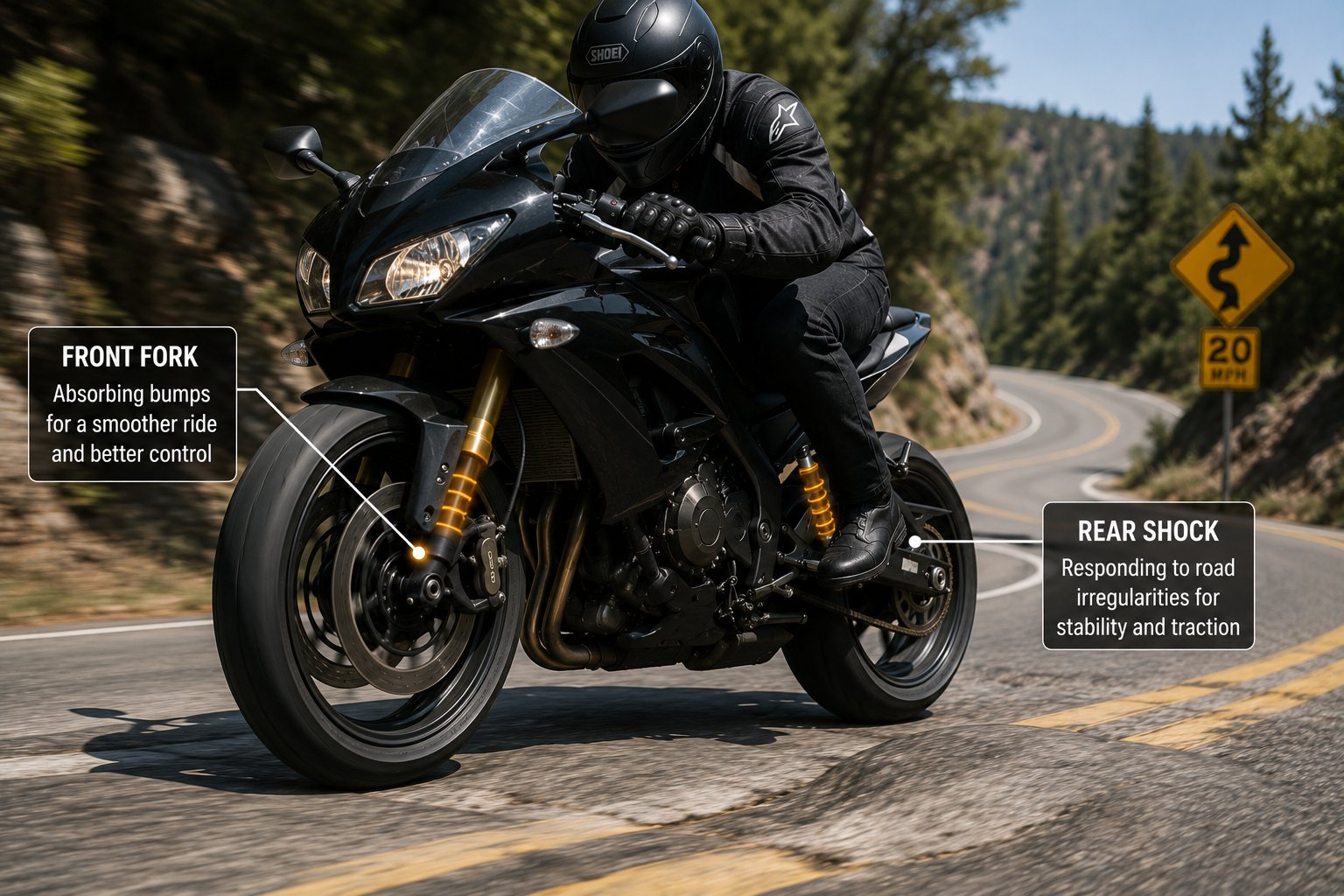
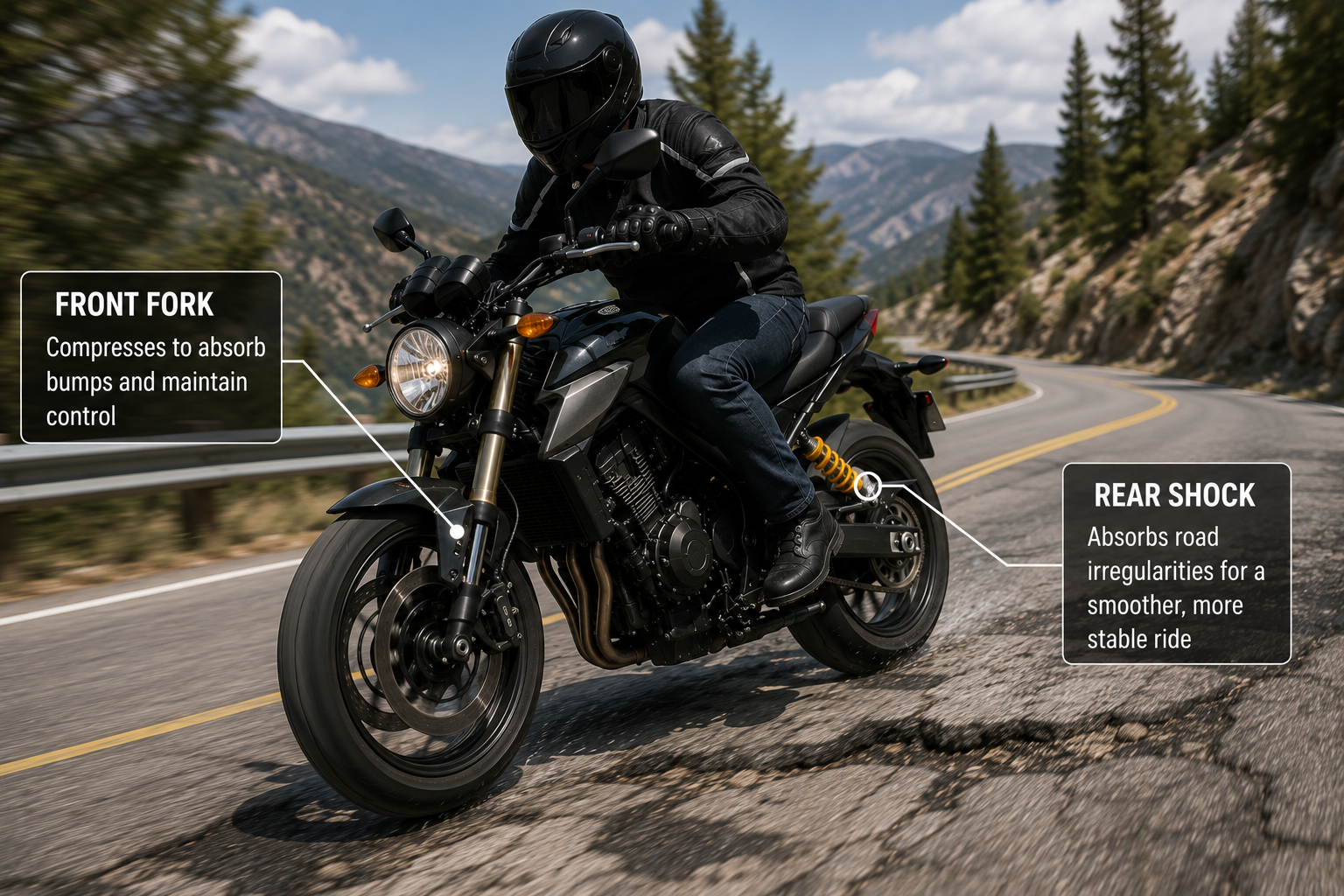
Motorcycle suspension systems are designed to absorb bumps, keep the tires in contact with the road, and provide stability. Most motorcycles use telescopic front forks and either dual rear shocks or a monoshock system. Each component works together to maintain balance and traction under different riding conditions.
The front forks manage steering and front wheel movement, while the rear suspension handles weight distribution, acceleration, and braking forces. Suspension tuning allows riders to adjust for weight, riding style, and road conditions, which directly impacts safety.
How Suspension Affects Handling
Suspension impacts how a motorcycle handles in multiple ways:
- Braking: Proper suspension absorbs front brake forces and prevents wheel lock or excessive dive.
- Acceleration: Rear suspension ensures traction and prevents the rear wheel from hopping under power.
- Cornering: Well-tuned suspension improves stability through curves, reduces lean over, and enhances rider confidence.
- Road Feedback: Suspension transmits road feel to the rider, allowing better anticipation of hazards.
Neglecting suspension maintenance can result in harsh rides, reduced traction, and greater risk of accidents.
Adjusting Your Suspension for Comfort
Proper suspension adjustment improves comfort and control. Riders can adjust preload, compression, and rebound settings to match weight, riding style, and road conditions.
- Preload: Adjusts spring tension for rider weight and passenger load.
- Compression: Controls how fast the suspension compresses over bumps.
- Rebound: Controls how fast the suspension returns to its original position.
Riders should consult the owner’s manual for recommended settings and test adjustments in safe conditions. A properly adjusted suspension reduces fatigue, improves stability, and prevents tire wear.
Maintenance and Inspection
Regular inspection of suspension components is vital. Check for leaks in fork seals, worn bushings, and damaged shocks. Suspension maintenance includes:
- Inspecting fork seals for oil leaks
- Checking rear shock for proper damping and spring condition
- Ensuring suspension bolts are properly torqued
- Replacing worn components promptly
Suspension failures can dramatically reduce control and increase the likelihood of accidents, particularly during braking or cornering.
Suspension Upgrades and Aftermarket Options
Advanced riders often upgrade suspension to improve performance and comfort. Aftermarket shocks and forks can be tuned for sport riding, touring, or dual-sport applications. Upgrades may include adjustable preload, remote reservoirs, or stiffer damping to handle heavier loads.
When upgrading, consider the trade-offs between comfort and performance. Touring setups favor comfort and smoothness, while sport setups favor sharper handling and responsiveness.
Common Suspension Mistakes to Avoid
- Ignoring worn suspension components
- Failing to adjust for passenger weight
- Using improper settings for road conditions
- Overloading the motorcycle beyond recommended limits
Riders should routinely inspect, maintain, and tune suspension systems to prevent accidents and improve comfort.
Suspension and Rider Safety
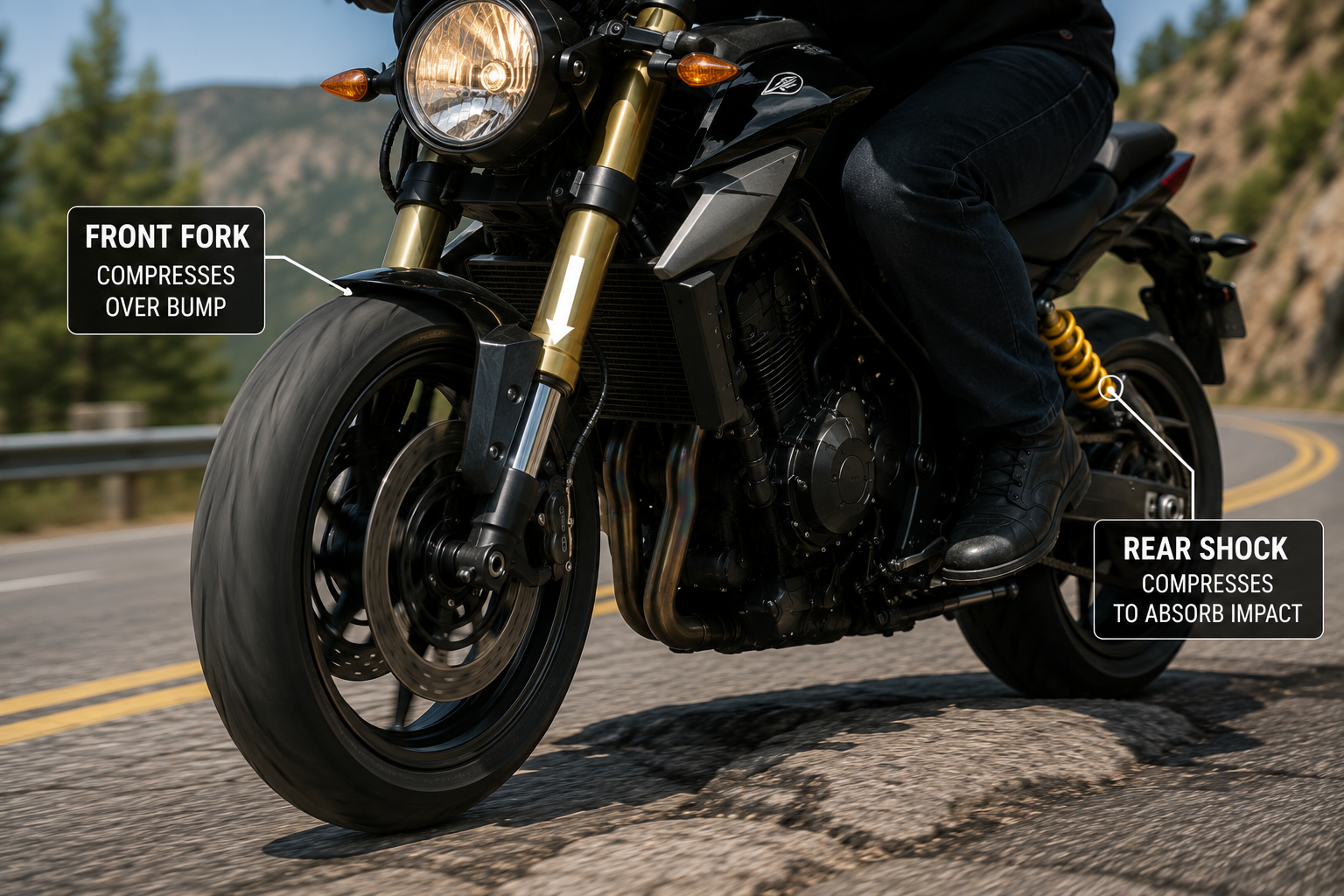
Suspension directly affects how safely a motorcycle handles sudden obstacles, uneven surfaces, and braking events. Properly tuned suspension keeps tires in contact with the road, which is essential for traction, stability, and predictable handling. Riders who neglect suspension are at higher risk of sliding, loss of control, or crashes.
Conclusion
Motorcycle suspension is more than just a comfort feature; it is a critical safety system. Understanding its function, adjusting it for rider and passenger weight, and performing regular maintenance improves handling, reduces fatigue, and prevents accidents. Every rider should include suspension checks as part of routine motorcycle safety practices.
For additional tips on motorcycle safety and injury prevention, see our injury prevention resources and our protective gear guide.