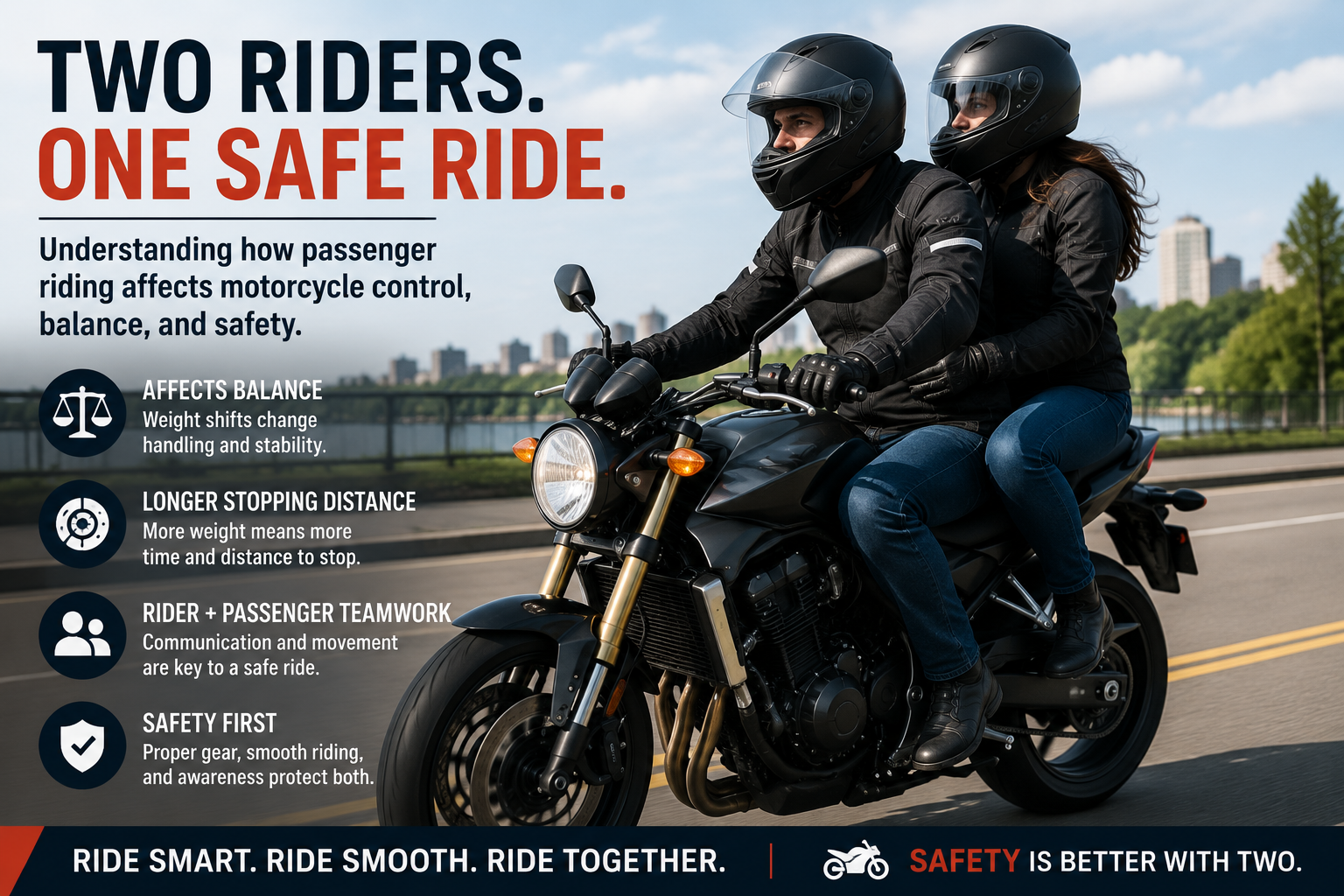
Carrying a passenger on a motorcycle significantly changes how the bike handles, balances, and responds to rider input. While riding solo already requires precision and awareness, adding a passenger introduces new challenges that affect braking distance, acceleration, cornering stability, and overall control.
Understanding how passenger weight and movement impact motorcycle performance is essential for both safety and comfort. Even experienced riders must adjust their riding style when carrying a passenger to reduce accident risk and maintain stability on the road.
How Passenger Weight Affects Balance
The most immediate effect of carrying a passenger is the change in the motorcycle’s center of gravity. The additional weight shifts the balance toward the rear of the bike, which can affect steering responsiveness and stability.
At low speeds, motorcycles become more difficult to control when a passenger is onboard. Simple maneuvers such as turning, stopping, and balancing at intersections require more effort and smoother input from the rider.
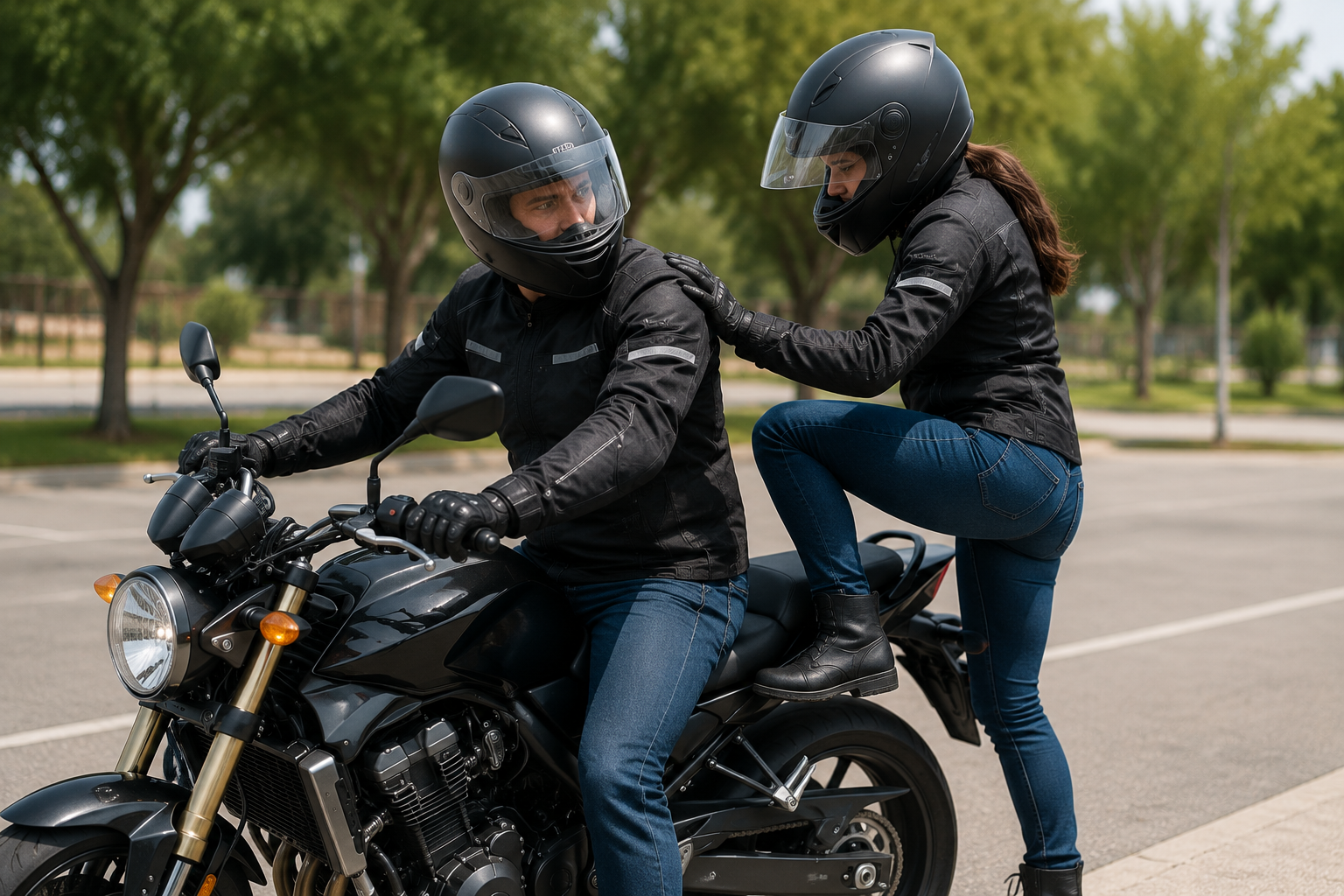
Passengers who move suddenly or lean incorrectly can destabilize the bike. For this reason, communication before riding is essential to ensure the passenger understands how to sit and move properly.
Braking and Acceleration Changes
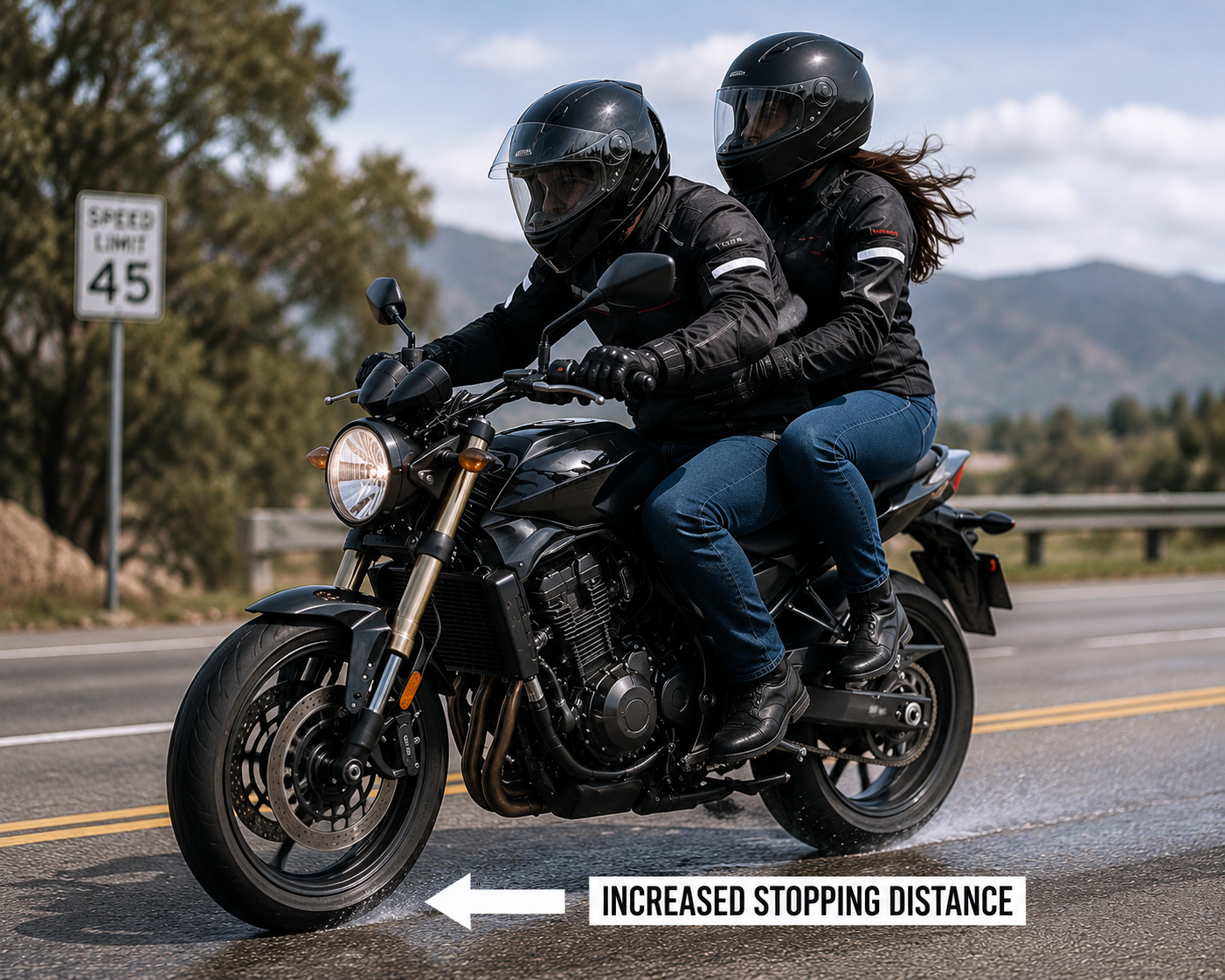
One of the most critical adjustments when riding with a passenger is braking distance. The added weight increases momentum, meaning the motorcycle requires a longer distance to come to a complete stop.
Riders must begin braking earlier and apply pressure more gradually to avoid sudden weight shifts that can destabilize the bike. Emergency braking becomes more challenging and requires smoother control of both front and rear brakes.
Acceleration is also affected. A motorcycle carrying a passenger will respond more slowly when the throttle is applied. Riders should avoid aggressive acceleration to maintain balance and reduce strain on the drivetrain.
According to the NHTSA, load changes such as passengers significantly affect motorcycle handling and stopping performance.
Cornering and Turning Adjustments
Turning with a passenger requires greater caution. The motorcycle becomes less agile, and leaning angles must be controlled more carefully. Sharp or sudden turns can cause instability if the passenger is not properly aligned with the rider.
Passengers should be instructed to lean with the rider rather than independently. Any mismatch in movement can cause imbalance, especially at higher speeds or during tight turns.
Communication Between Rider and Passenger
Clear communication is essential before and during the ride. Riders should explain basic instructions to passengers, including how to hold on, how to sit, and how to move during turns or stops.
- Hold the rider’s waist or grab handles securely
- Avoid sudden movements during acceleration or braking
- Lean naturally with the rider during turns
- Keep feet on footrests at all times
Good communication reduces surprises and improves overall riding safety.
Safety Tips for Riding with a Passenger
Riders must adjust their riding style when carrying a passenger. Smooth, predictable movements are key to maintaining control and preventing accidents.
- Increase following distance for extra reaction time
- Brake earlier and more gradually
- Avoid sudden lane changes or sharp turns
- Check tire pressure before riding with added weight
- Ensure both rider and passenger wear proper protective gear
These adjustments help maintain stability and reduce stress on the motorcycle’s suspension and tires.
Passenger Responsibilities
Passengers play an important role in safety. Improper behavior can directly impact motorcycle stability. Riders should ensure passengers understand their responsibilities before the ride begins.
Passengers should remain relaxed, avoid leaning independently, and stay aligned with the rider’s movements. Sudden shifts in weight can cause instability, especially during braking or cornering.
Impact on Suspension and Tires
Additional weight from a passenger compresses the suspension system more than normal. This affects how the motorcycle absorbs bumps and road irregularities.
Tires also experience increased load, which can affect grip and wear patterns. Checking tire pressure before riding with a passenger is critical for maintaining traction and stability.
Proper suspension adjustment, if available, should be made according to manufacturer recommendations for two-up riding.
Common Mistakes Riders Make
- Riding too fast with a passenger
- Failing to explain safety instructions
- Ignoring tire pressure adjustments
- Allowing passengers to move independently
- Using aggressive braking or acceleration
These mistakes increase the risk of loss of control and can lead to avoidable accidents.
When to Avoid Riding with a Passenger
There are situations where carrying a passenger is not recommended. Poor weather conditions, unfamiliar roads, or mechanical issues increase risk when additional weight is added to the motorcycle.
New riders should also avoid carrying passengers until they have sufficient experience controlling the motorcycle solo.
Conclusion
Riding with a passenger significantly changes motorcycle handling and safety dynamics. Weight distribution, braking distance, and steering responsiveness all require adjustment. With proper communication, smooth riding techniques, and safety awareness, both rider and passenger can enjoy a safe and controlled ride.
For more motorcycle safety guidance, visit our injury prevention section.