Motorcycle riding requires constant attention to road conditions. Unlike cars, motorcycles are highly sensitive to changes in surface texture, grip, and stability. Even small hazards such as loose gravel, wet patches, or uneven asphalt can significantly impact control and increase accident risk. Understanding how road surface conditions affect motorcycle stability is essential for every rider.
According to the NHTSA, a large number of motorcycle crashes involve environmental and road condition factors. Riders who learn how to adapt to these hazards are significantly less likely to lose control or be involved in serious collisions.
Why Road Surface Conditions Matter
Motorcycles rely on two small contact patches with the road surface. Unlike cars, there is no stability from four wheels, making traction extremely important. Any reduction in grip can lead to slipping, sliding, or complete loss of control.
Road surfaces are constantly changing due to weather, traffic wear, construction, and environmental factors. Riders must continuously adjust speed, braking, and positioning to maintain stability.
Wet and Slippery Roads
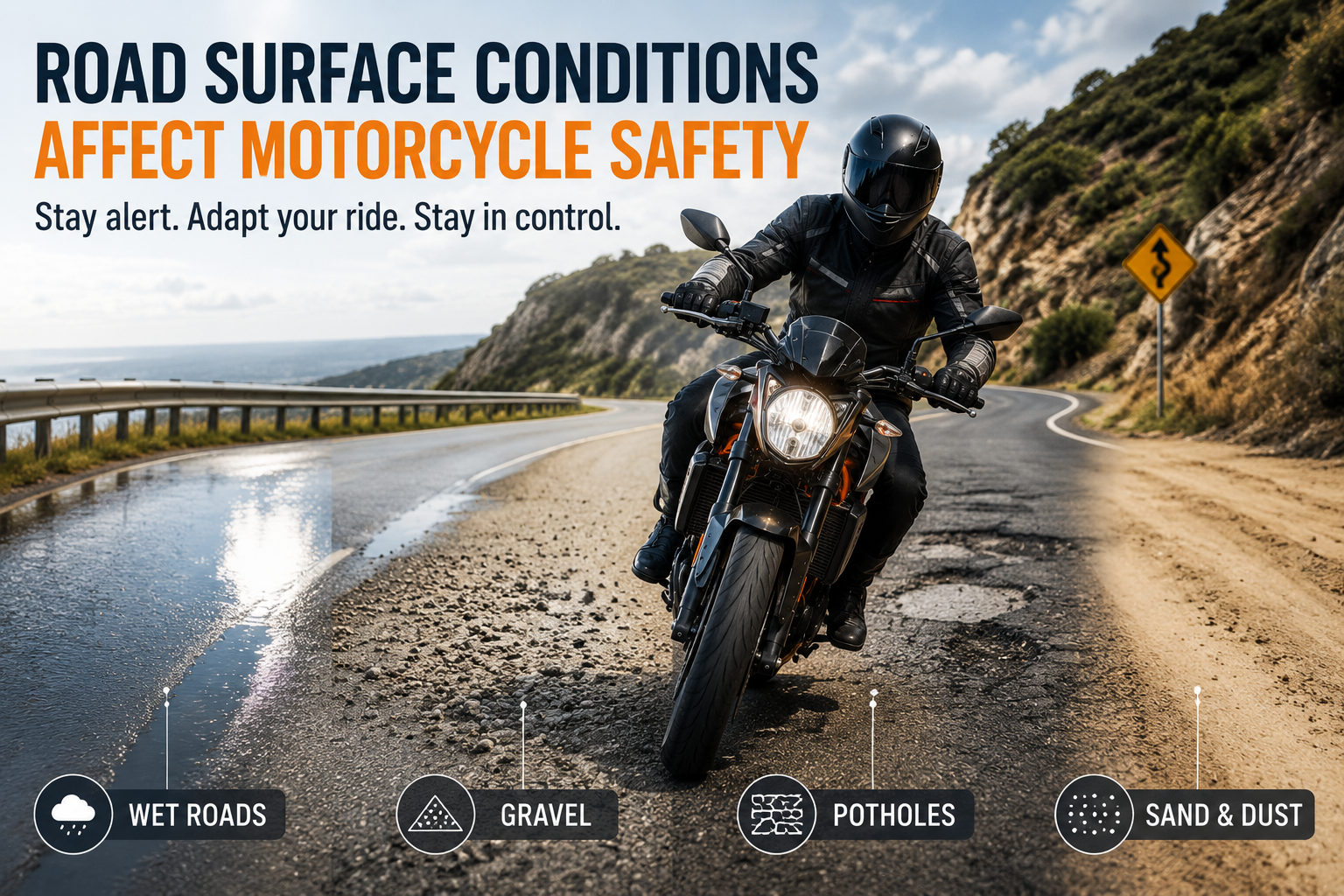
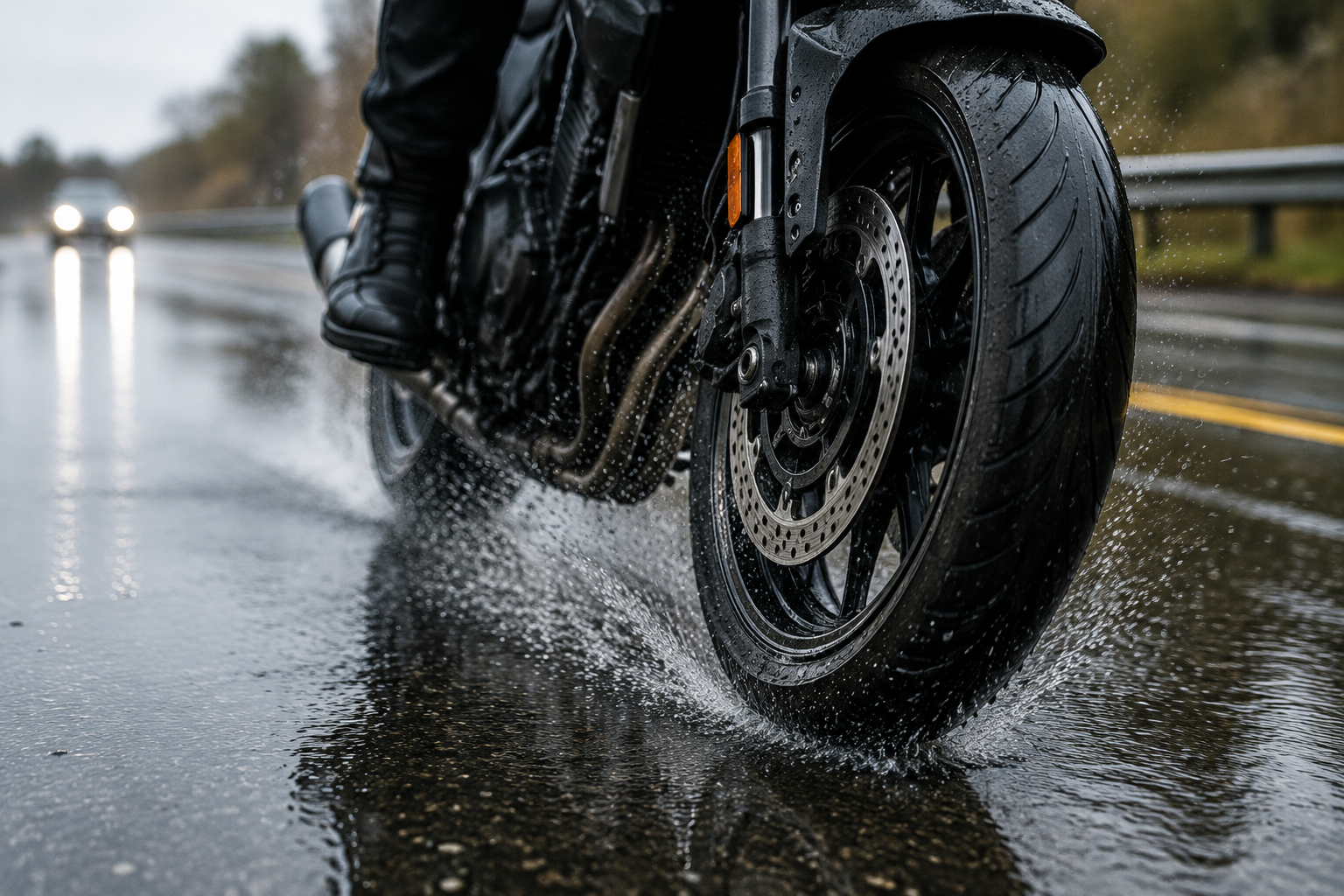
Wet roads are one of the most dangerous conditions for motorcyclists. Rain reduces tire grip and increases stopping distance. Oil and dirt on the road surface become more hazardous when mixed with water.
Hydroplaning can occur when tires lose contact with the road surface. This is especially dangerous at higher speeds.
- Reduce speed in wet conditions
- Avoid sudden braking or acceleration
- Maintain steady throttle control
For more safety tips, see our guide on motorcycle injury prevention.
Potholes, Gravel, and Road Debris
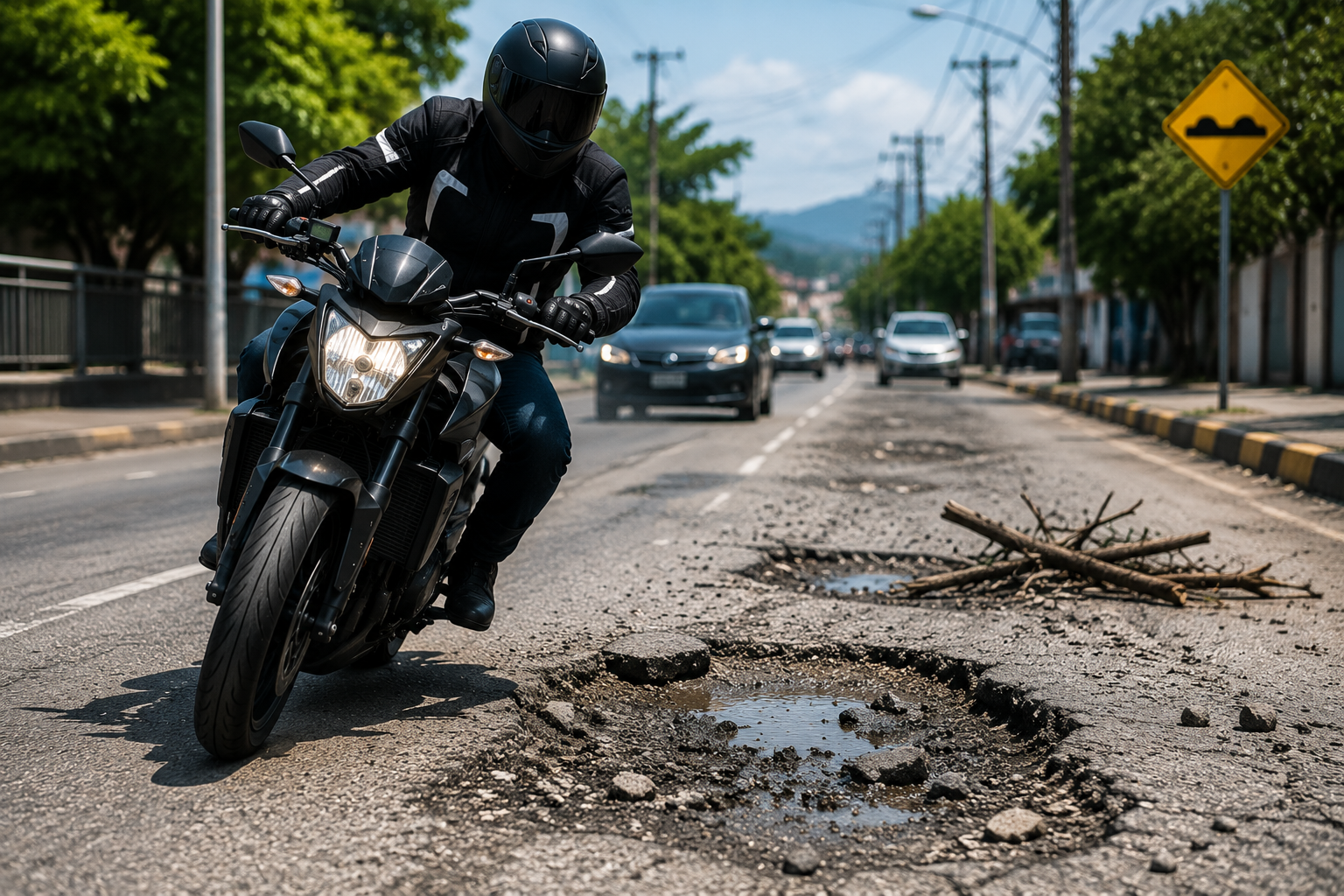
Potholes and loose gravel are common hazards that can destabilize motorcycles instantly. Hitting a pothole can damage suspension or cause sudden steering imbalance.
Gravel reduces traction and can cause wheels to slide unexpectedly, especially during turning or braking.
How to Handle These Hazards
- Scan the road ahead continuously
- Avoid sudden steering inputs
- Slow down in construction or rural areas
Riders should also maintain safe following distances to allow time to react to unexpected road damage.
Oil, Sand, and Painted Road Surfaces
Oil spills are extremely dangerous for motorcycles, especially at intersections where vehicles frequently stop and start. Sand and dust reduce traction similarly by creating a loose surface layer between tires and asphalt.
Road paint, such as lane markings, becomes slippery when wet. Riders should avoid leaning heavily while crossing painted areas.
How Riders Can Adapt to Changing Road Conditions
Successful motorcycle riding depends on adaptability. Riders must constantly adjust their behavior based on surface feedback.
- Reduce speed in uncertain conditions
- Increase following distance
- Maintain smooth throttle and brake control
- Avoid aggressive leaning in turns
Proper riding posture and balance also help absorb minor road irregularities.
Suspension and Tire Role in Stability
Motorcycle suspension systems help absorb road imperfections. However, poor maintenance or worn tires can reduce their effectiveness.
Tires with low tread depth are especially dangerous on wet or uneven surfaces. Regular inspection is critical to maintaining road grip.
See also our guide on protective riding safety gear.
Urban vs Rural Road Hazards
Urban roads typically include more traffic hazards such as oil spills, potholes, and painted surfaces. Rural roads often present gravel, uneven pavement, and sudden elevation changes.
Both environments require different riding strategies. Urban riding demands awareness of sudden stops and intersections, while rural riding requires anticipation of surface irregularities.
Weather Interaction with Road Surfaces
Weather amplifies road surface risks. Rain increases slipperiness, while heat can cause asphalt to soften. Wind may blow debris onto roads, creating sudden hazards.
Fog and low visibility conditions make it harder to detect surface issues in time.
Common Mistakes Riders Make
- Riding too fast on unfamiliar roads
- Ignoring road surface changes
- Over-braking on slippery surfaces
- Failing to scan ahead properly
These mistakes significantly increase accident risk, especially in poor weather or low-light conditions.
Preventive Riding Strategies
Preventive riding focuses on anticipating hazards before they become dangerous.
- Keep both hands relaxed for better control
- Use engine braking where possible
- Maintain consistent lane positioning
- Avoid sudden directional changes
Training and experience play a key role in developing these habits.
Conclusion
Road surface conditions play a major role in motorcycle stability and safety. Wet roads, gravel, potholes, oil, and sand all reduce traction and increase accident risk. By understanding how these conditions affect handling, riders can make smarter decisions and reduce danger.
Safe riding depends on awareness, preparation, and adaptability. Always monitor road conditions, adjust speed accordingly, and maintain proper motorcycle maintenance to ensure optimal performance.
For more safety insights, visit our injury prevention section.