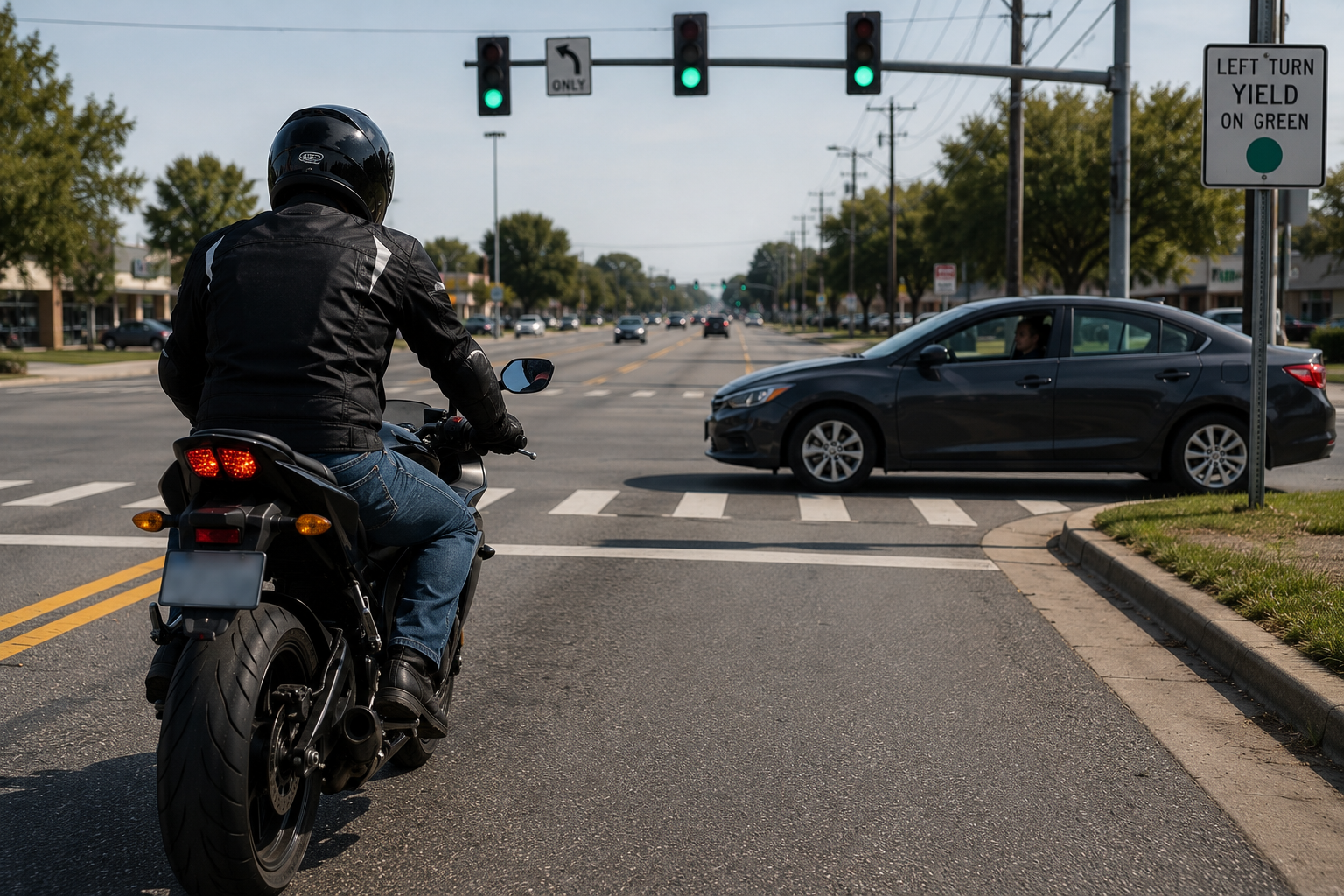
Left turn motorcycle accidents are among the most dangerous intersection crashes because they often happen when a vehicle turns across a rider’s path. These collisions can occur quickly, especially when a driver misjudges speed, overlooks a motorcycle, or turns before the rider has enough time to react.
For motorcyclists, intersections require extra attention. A rider may have the right of way, but that does not always prevent a turning vehicle from creating a serious hazard. Understanding why these crashes happen can help riders recognize danger earlier and reduce risk near intersections.
Why Left Turn Motorcycle Accidents Happen
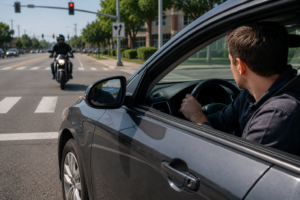 Many left turn motorcycle accidents happen because drivers fail to see an approaching motorcycle. Motorcycles are smaller than cars and trucks, which can make them harder to notice in busy traffic. A driver may look toward traffic but still fail to recognize a motorcycle moving through the intersection.
Speed judgment also plays a major role. Drivers sometimes miscalculate how fast a motorcycle is approaching. A bike may appear farther away than it really is, especially at dusk, in glare, or when traffic is moving quickly. This mistake can lead a driver to turn left when there is not enough space.
Distraction can also contribute to these crashes. A driver looking at a phone, navigation screen, passenger, or traffic signal may miss a motorcycle completely. Even a brief distraction can be enough to cause a serious collision.
Left turn crashes can also involve aggressive driving. Some drivers hurry through yellow lights or rush to turn before oncoming traffic arrives. When a motorcyclist is in that oncoming lane, the rider may have very little time to brake or swerve.
Why These Crashes Are So Dangerous
Left turn collisions often involve the front of a motorcycle striking the side of a turning vehicle. This can throw the rider from the bike or force the rider into the vehicle, pavement, or nearby traffic. Because motorcycles do not have a protective frame, airbags, or seat belts, the rider absorbs much of the impact.
Common injuries can include broken bones, head injuries, back injuries, road rash, internal injuries, and leg trauma. Protective equipment can reduce injury severity, but it cannot remove all risk. Riders can review more safety information in this related article about protective motorcycle gear.
The National Highway Traffic Safety Administration provides motorcycle safety information for riders and drivers. Readers can also review NHTSA motorcycle safety resources for broader guidance on rider visibility and crash prevention.
Common Places Where Left Turn Collisions Occur
Intersections are the most common setting for left turn motorcycle accidents. These may include signalized intersections, four-way stops, driveway entrances, parking lot exits, and side streets. Any location where one vehicle turns across another vehicle’s path can create risk.
Driveways and parking lots can be especially hazardous because drivers may focus on gaps in car traffic and miss a motorcycle. Riders should also use caution near shopping centers, gas stations, apartment entrances, and business driveways.
Multi-lane roads can create another challenge. A driver in one lane may stop to allow a vehicle to turn left, while a motorcycle in another lane continues forward. This can create a hidden hazard when the turning vehicle crosses into the rider’s lane.
Visibility Problems at Intersections
Visibility is one of the biggest concerns in left turn motorcycle accidents. A motorcycle can disappear in a vehicle’s blind spot, behind another car, or in the glare of headlights or sunlight. Bad weather, night riding, and poor road lighting can make the problem worse.
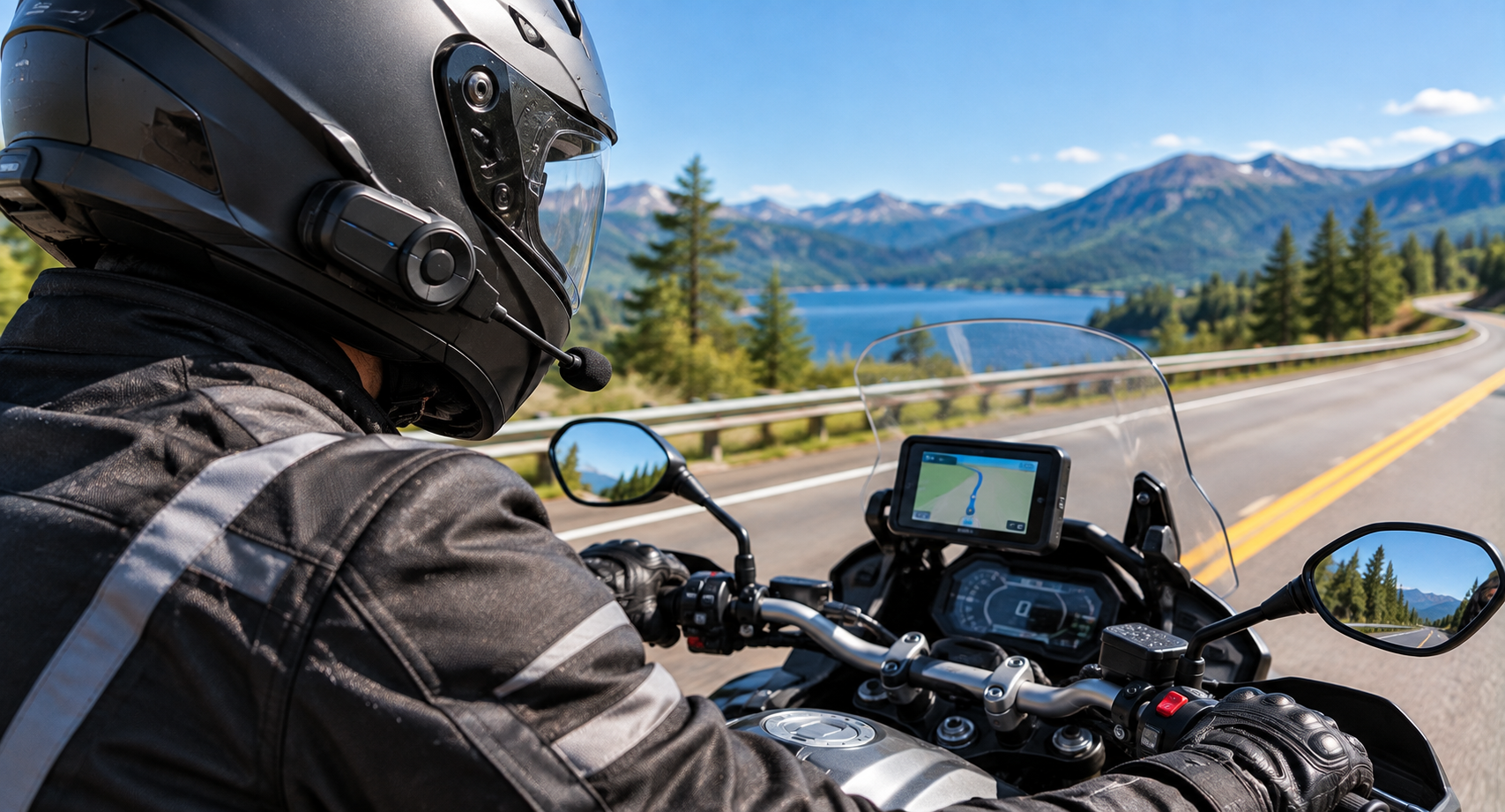
Riders can improve visibility by using headlights, wearing reflective gear, choosing lane positions carefully, and avoiding long periods in blind spots. Bright or reflective riding gear can also help drivers notice motorcycles sooner.
Drivers also share responsibility. They should look twice before turning left, scan for motorcycles, and avoid rushing through turns. The Insurance Institute for Highway Safety provides research and safety information related to motorcycles through its motorcycle safety topic page.
Safety Tips for Riders Near Intersections
Motorcyclists can reduce risk by approaching intersections with caution, even when they have the right of way. A rider should watch for turning vehicles, front wheel movement, driver hesitation, and gaps in traffic that may tempt a driver to turn.
Reducing speed near intersections can give riders more time to respond. Covering the brakes may also help if a vehicle suddenly turns. Riders should avoid assuming that a driver sees them. Eye contact can help, but it does not always mean the driver has judged the rider’s speed correctly.
Lane position matters. Riders should choose a position that improves visibility and escape options. Staying out of blind spots and avoiding hidden positions behind larger vehicles can make a motorcycle easier to see.
Riders who want more prevention resources can visit the site’s injury prevention category for related safety topics.
What to Do After a Left Turn Motorcycle Accident
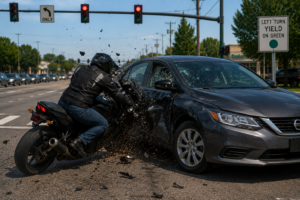 After a left turn collision, safety comes first. Riders should move away from traffic if they can do so safely. Emergency services should be called if anyone is injured or if the crash blocks traffic.
Documentation can matter after this type of crash. Photos of vehicle positions, traffic lights, skid marks, turn lanes, damage points, and road conditions may help explain what happened. Witness names and contact information can also be helpful.
A police report can provide an official record of the crash. Riders can read this related guide on motorcycle accident scene steps for more post-crash guidance.
How Fault May Be Reviewed
Fault in a left turn motorcycle accident often depends on right of way, speed, visibility, traffic signals, and driver actions. A turning driver may be responsible if they failed to yield to an oncoming motorcycle. However, investigators may also review whether the rider was speeding, changing lanes, or riding without proper lights.
Insurance companies may examine police reports, photos, witness statements, traffic camera footage, and vehicle damage. The point of impact can be especially important because it may show whether the motorcycle had entered the intersection before the turn occurred.
Readers can also review your related post on motorcycle accident statistics for broader crash trends and risk factors.
Conclusion
Left turn motorcycle accidents are dangerous because they often happen suddenly and leave riders with little protection. Drivers may fail to see motorcycles, misjudge their speed, or turn too quickly across traffic. Riders can reduce risk by staying visible, slowing near intersections, watching turning vehicles, and wearing proper gear.
Intersections require constant awareness from both riders and drivers. A careful approach, strong visibility habits, and defensive riding can make a meaningful difference when traffic begins to move across a rider’s path.