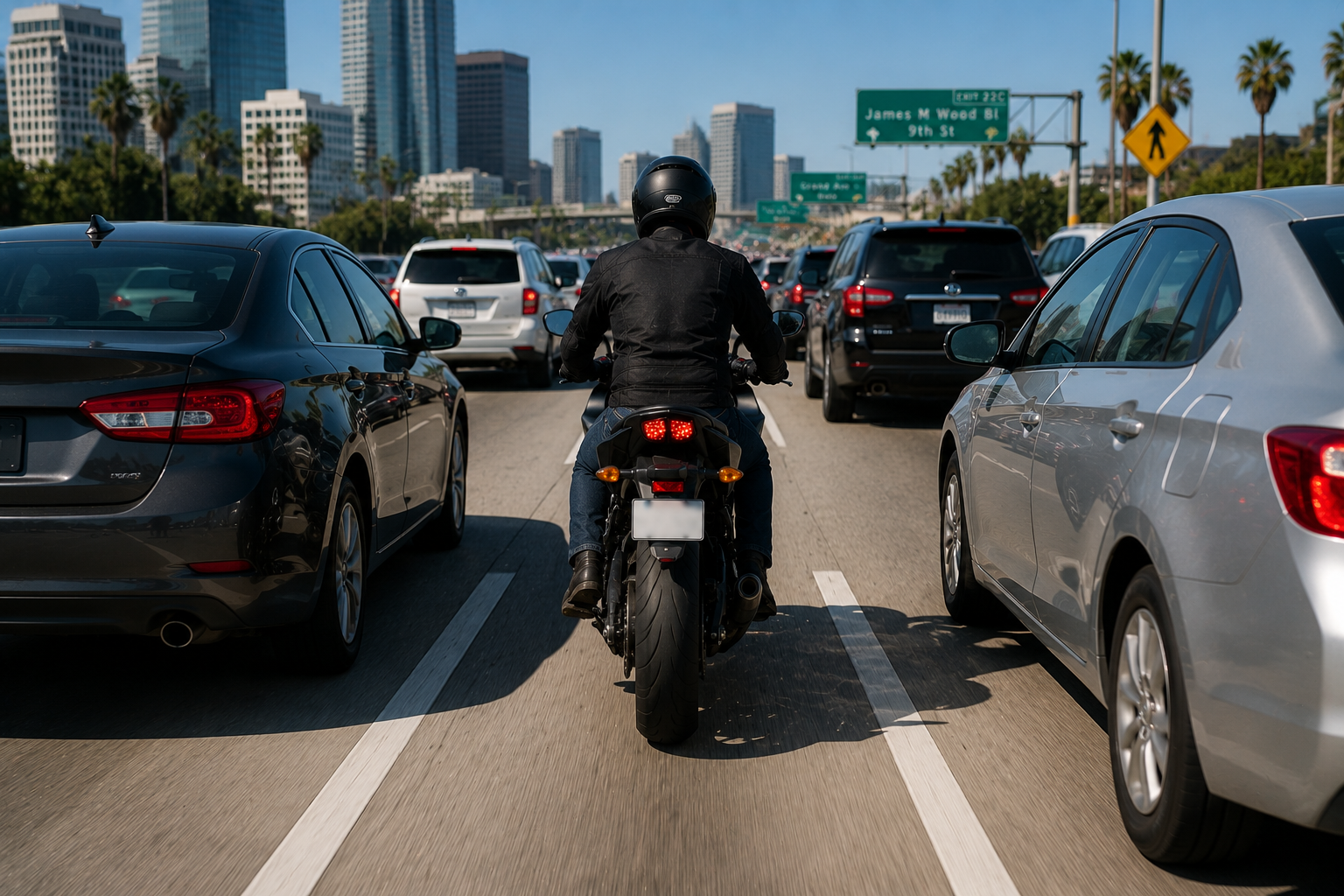
Motorcycle lane splitting, also known as white-lining, has become increasingly common in congested urban traffic. Lane splitting refers to a motorcyclist riding between lanes of slow-moving or stopped vehicles, typically on multi-lane highways. While some riders use it to reduce commute time, it carries risks and legal considerations that all motorcyclists should understand. This article explores the risks of lane splitting, the legal framework in different regions, and safety practices for riders.
What Is Motorcycle Lane Splitting?
Lane splitting occurs when a motorcycle moves between two lanes of vehicles traveling in the same direction. In heavy traffic, lane splitting allows riders to navigate past slow or stopped cars. While it can reduce congestion and commute times, lane splitting exposes riders to unique hazards, especially when cars change lanes unexpectedly or drivers fail to see motorcycles in blind spots.
Understanding lane splitting is critical to reducing accidents. According to studies conducted by the NHTSA, lane splitting can be safe when performed at low speeds and with caution, but improper execution dramatically increases crash risk.
Risks Associated with Lane Splitting
Reduced Reaction Time
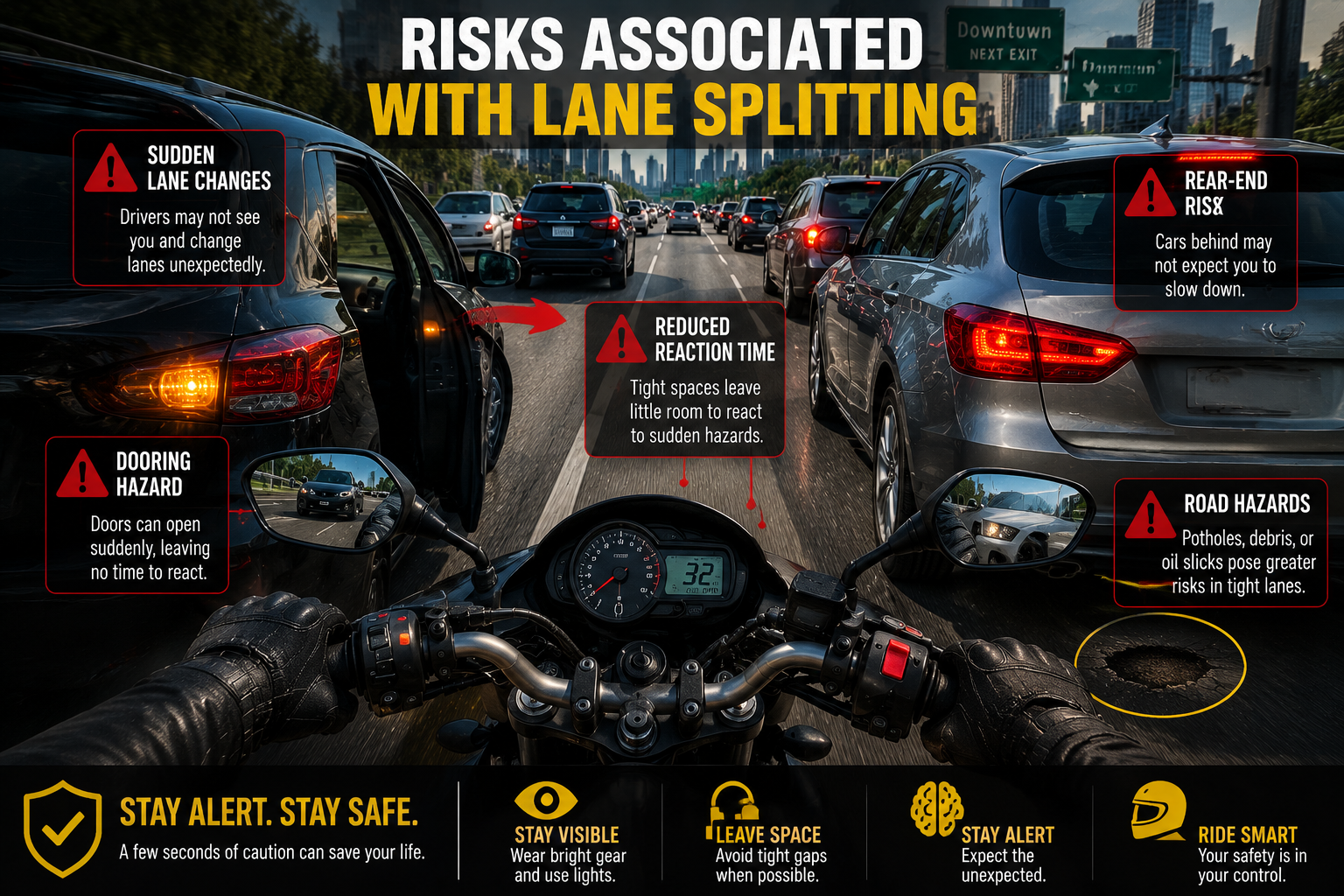
Lane splitting reduces a rider’s reaction time compared to normal lane travel. Vehicles on either side can change lanes or doors can open suddenly. A motorcyclist moving between lanes has minimal space to respond, and any sudden maneuver from a car can result in a collision.
Blind Spots and Visibility Issues
Motorcycles are smaller than cars, making them difficult to see. Drivers often fail to check blind spots adequately, increasing the likelihood of collisions when lane splitting. Reflective gear, proper headlights, and eye-catching helmets improve visibility, but they cannot eliminate the inherent risk of being between lanes.
Road Surface Hazards
Lane splitting exposes riders to uneven pavement, debris, and slippery surfaces. Lane edges, construction zones, and spilled fluids are particularly dangerous. If a rider loses traction, even at low speeds, it can lead to a loss of control and potential injury.
Legal Considerations for Lane Splitting
States Where Lane Splitting Is Legal
Lane splitting laws vary by jurisdiction. In California, for example, lane splitting is legal under certain conditions, including low speeds relative to traffic. Other states and countries may explicitly ban lane splitting or provide no legal guidance, leaving riders exposed to fines or legal liability in case of a crash.
Before lane splitting, riders should research local regulations to avoid legal consequences. The legality of lane splitting can also influence insurance claims in case of an accident, as insurers may consider lane splitting against traffic laws when determining fault.
Insurance Implications
If an accident occurs while lane splitting, insurance companies often investigate whether the maneuver was legal and safe. In states where lane splitting is illegal, riders may face challenges filing claims. Conversely, in states where it is legal, insurers still examine speed, traffic conditions, and rider behavior to assign fault or determine coverage.
Liability Considerations
Lane splitting accidents can involve multiple parties. A rider may be partially at fault if they were traveling too fast or not paying attention. Drivers can be at fault if they fail to check for motorcycles while changing lanes. Understanding how liability is assessed is crucial for riders who want to protect themselves legally.
Safety Tips for Lane Splitting
Maintain Low Speeds
Lane splitting should always be performed at low speeds relative to traffic. Many studies suggest that a speed difference of no more than 10-15 mph reduces accident risk. High-speed lane splitting significantly increases the severity of injuries in a collision.
Wear Protective Gear
Protective clothing, including helmets, jackets, gloves, and boots, reduces injury risk in case of an accident. Reflective gear and brightly colored helmets increase visibility for drivers, which is essential for safe lane splitting. Review more on protective gear in this related post: Protective Motorcycle Gear.
Stay Alert and Scan Traffic
Riders must scan traffic continuously. Watch for vehicles signaling turns, braking, or changing lanes. Keep an eye on mirrors and anticipate sudden maneuvers from drivers. Avoid lane splitting near intersections, exits, or areas with frequent lane changes.
Use Proper Lane Positioning
Positioning within the lane matters. Riders should avoid tight spaces where car mirrors may strike them. Choose a lane position that maximizes visibility and escape routes in case of sudden hazards.
Common Misconceptions About Lane Splitting
Some riders believe lane splitting is inherently illegal, or that it dramatically increases accident risk in all situations. Studies show that, when executed safely and legally, lane splitting may reduce rear-end collisions by allowing motorcycles to avoid being trapped in slow-moving traffic. However, riders must always follow local laws and adjust behavior based on traffic conditions.
Another misconception is that lane splitting allows riders to move at any speed. Speeding between lanes increases both accident probability and severity. Maintaining a safe relative speed and keeping a buffer from vehicles on either side is essential.
Accident Prevention Strategies
Riders should combine lane splitting with other accident prevention strategies. This includes defensive riding, observing speed limits, anticipating driver behavior, and maintaining a properly maintained motorcycle. Tire condition, brake performance, and suspension all affect handling in tight spaces.
For additional preventive tips, visit our Injury Prevention category for related guides on accident avoidance and road safety.
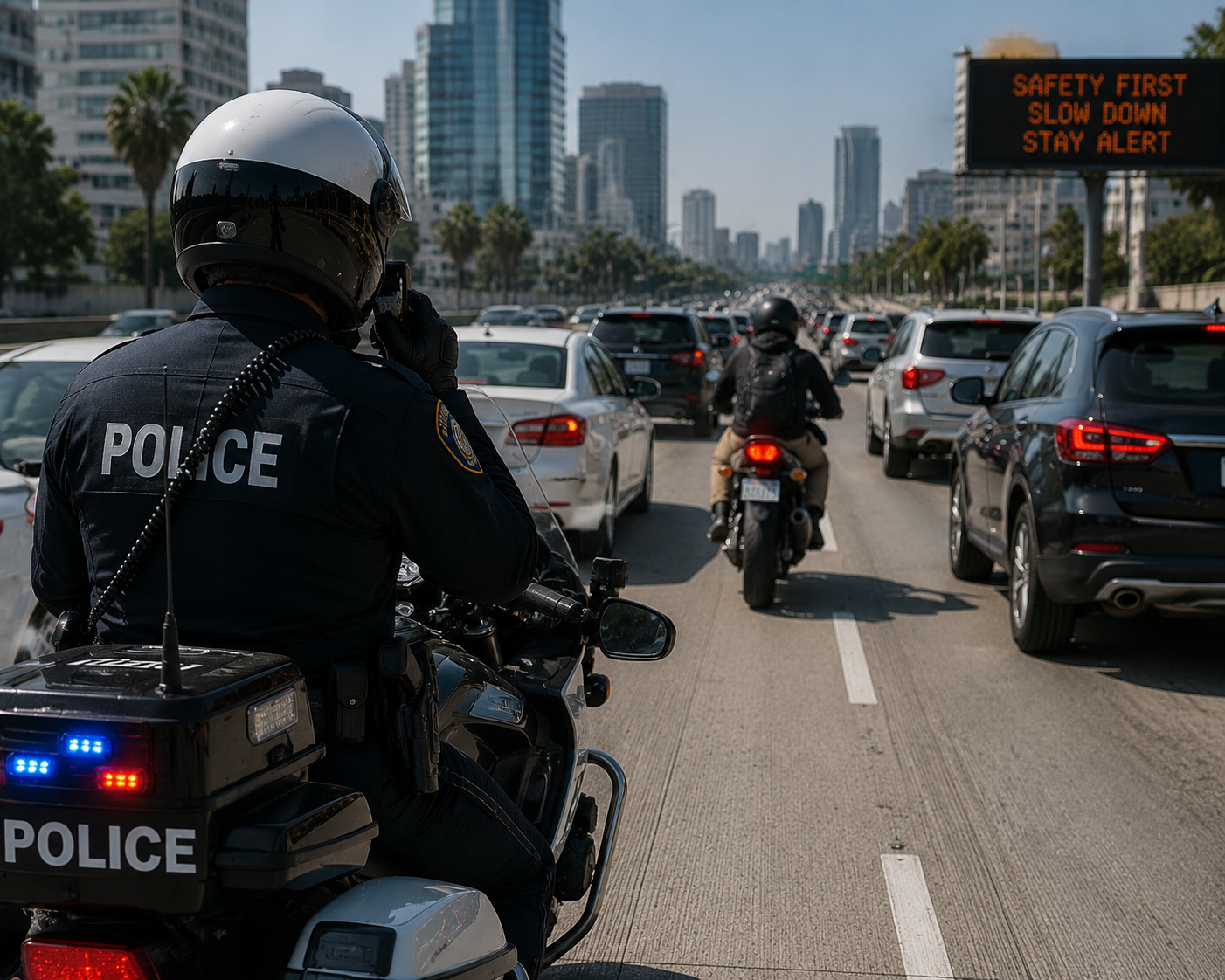
Lane Splitting in Traffic Congestion
Lane splitting is most common in congested urban areas where vehicles are traveling slowly. In stop-and-go traffic, lane splitting can allow motorcycles to reach their destination faster while avoiding being rear-ended. Even so, riders must ensure there is sufficient space and that surrounding drivers are aware of the motorcycle’s presence.
Drivers often fail to anticipate motorcycles passing between lanes, so maintaining visibility and signaling intentions (via brake lights and headlight positioning) can help prevent collisions. Anticipating driver behavior, such as sudden lane changes or opening doors, is essential for safety.
Conclusion
Motorcycle lane splitting can be an efficient way to navigate heavy traffic but carries inherent risks and legal considerations. Riders must understand local laws, maintain proper speed, wear protective gear, and stay highly alert. Using defensive riding techniques and combining lane splitting with other accident prevention strategies reduces risk and promotes safer commuting.
Understanding the legal and safety aspects of lane splitting is critical. Always assess traffic conditions, obey local laws, and prioritize safety over convenience. Proper preparation and awareness can help riders take advantage of lane splitting without increasing the likelihood of injury or legal complications.
For further reading on handling accident scenes after a motorcycle collision, see: Motorcycle Accident Scene Steps.